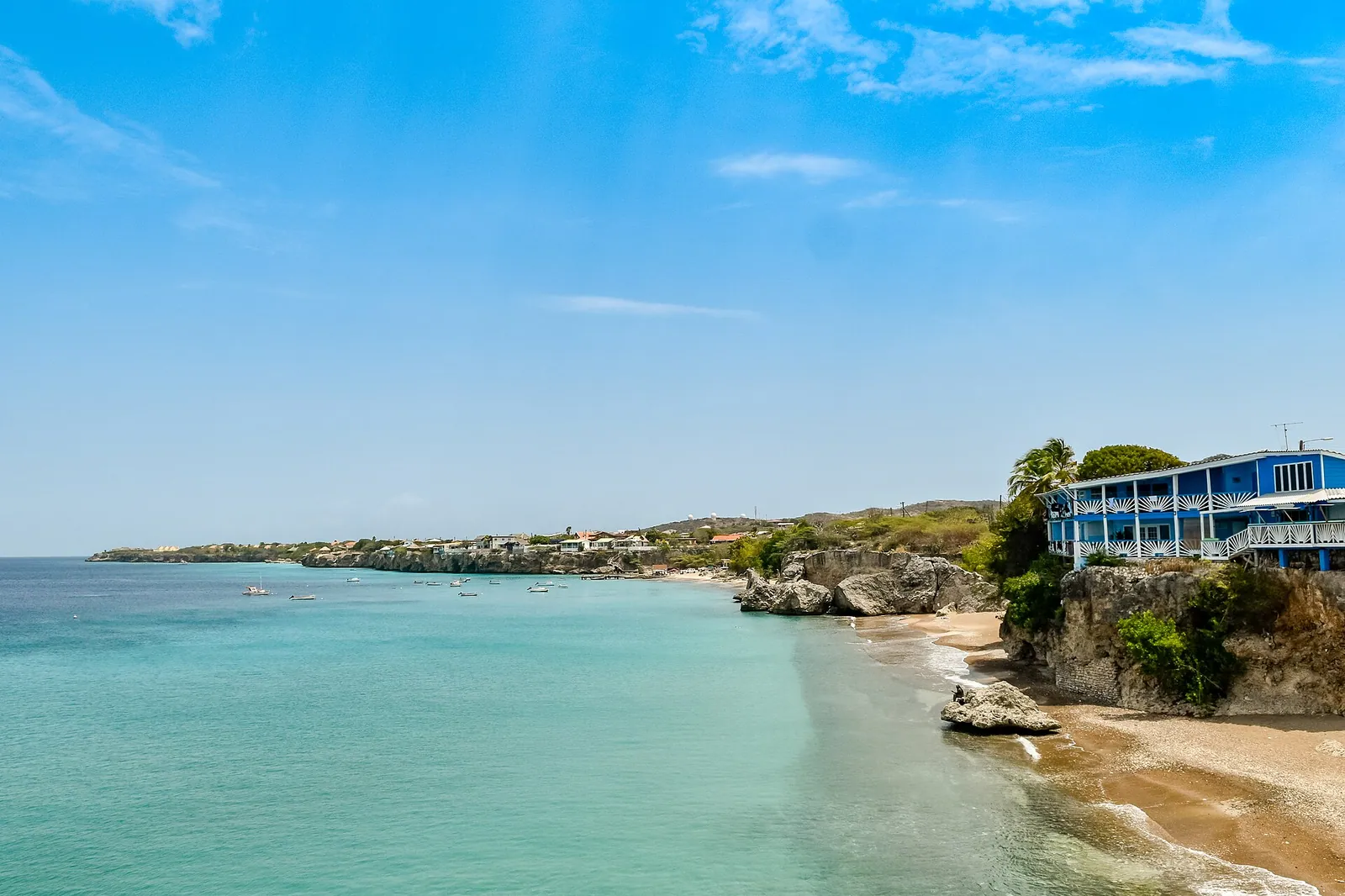
Considering staying on the west side of Curaçao? Guide to the quieter, nature-focused lifestyle, who it suits, and why you’ll want a rental car.
In this guide
Staying on the West Side of Curaçao
The west side of Curaçao – usually meaning roughly from Coral Estate and Sint Willibrordus out toward Westpunt – feels like a different island from busy Willemstad. It’s quieter, more spread out and closer to the island’s wild nature and best dive sites.
If you picture days built around the sea, sunsets and starry skies rather than bar hopping and shopping, this area is worth a serious look.
What “West Side” Living Actually Feels Like
Pace and atmosphere
Life out west is slow and low-key. You’ll hear more birds than cars, and at night you’re more likely to see stars than neon. There are clusters of holiday homes, small resorts and local villages instead of a continuous strip of hotels.
Think: - Waking up to trade winds and roosters - A quick drive to small coves instead of one long hotel beach - Grilling on your porch rather than deciding which restaurant street to walk
If you need a “scene” every evening, this can feel too quiet. If you like the idea of your own space and a familiar cove you return to every day, it fits well.
Who the West Side Suits Best
Divers and snorkelers
This is the main reason many people base themselves in the west. A lot of Curaçao’s best shore-diving and snorkel spots line this coast, and staying nearby means:
- Short drives to multiple dive sites in one day
- Easy early-morning or sunset dives
- Less back-and-forth through city traffic with gear
There are several established dive shops and schools scattered along the west; some are attached to small resorts, others are independent. Check which sites they focus on and whether they offer gear storage or tank delivery when you book.
Nature lovers and hikers
If you want to hike Christoffel National Park at sunrise, watch birds around salt flats, or explore rugged coastline at Shete Boka, being based in the west cuts down on drive times. You can: - Hit the park gates right when they open (recommended before the heat builds) - Drop by a beach for a swim after a morning hike - Return “home” to somewhere quiet instead of city traffic
Couples and chill-seekers
The west side works well for: - Couples who want quiet sunsets, sea views and self-catering - Digital workers who value calm surroundings and don’t need to commute to town daily - Solo travelers comfortable driving and doing more self-directed exploring
If you’re planning late nights out in Willemstad several times a week, budget extra time and energy for those return drives – or consider splitting your stay between town and west.
Families
It can be a good choice for families who: - Prefer smaller, calmer beaches over big resorts - Like to cook some meals and spread out in an apartment or villa - Are okay with driving to attractions
Very small children may find the driving days long, and there are fewer built-for-kids facilities (playgrounds, big pool complexes, kids clubs) than around the large resorts near town.
Types of Places to Stay on the West Side
Self-catering apartments & villas
Best for: Families, longer stays, independent travelers
Self-catering is the dominant style on the west side. You’ll find: - Standalone villas with pools and sea views - Small apartment complexes on or near the coast - Houses in residential neighborhoods
Upsides:
- Lots of space and privacy
- Kitchens for cooking (useful because restaurants are more spread out)
- Often excellent views and breezes
Trade-offs:
- Less “service”: limited or no reception desk, fewer on-site facilities
- You need to plan groceries and transport yourself
- You might not be able to walk anywhere for dinner
When you book, check:
- How far it really is to the nearest beach (walking vs driving)
- Whether there’s air conditioning in bedrooms or entire unit
- Wi‑Fi reliability if you plan to work remotely
Small resorts and dive-focused properties
Best for: Divers, couples, shorter stays
There are a handful of small-to-medium resorts out west, often with:
- On-site or very close dive shops
- A restaurant or bar (sometimes open only certain days)
- Direct access or short walking distance to a beach or house reef
Upsides:
- Easier logistics for diving
- Some social life at the bar or dive center
- Fewer worries about things like tank transport and rinse areas
Trade-offs:
- You’re tied somewhat to the resort’s restaurant schedule unless you drive out
- Less of the “live like a local” feeling than a standalone house
Rural and village stays
Best for: Cultural interest, budget-conscious travelers
Staying in or near local villages inland from the coast (e.g. Barber, Tera Kòrá area, smaller neighborhoods) can be:
- Cheaper than oceanfront
- More of a local everyday-life vibe
- Centrally located for driving to different west-side beaches
You lose the step-out-your-door sea access, but if you’re happy to drive 10–20 minutes to the beach, it can make sense. Just be realistic about night driving and the need for navigation.
Why You Really Do Need a Car
Limited public transport and walking options
On maps, distances between beaches, parks and villages can look small. In practice:
- There are long stretches with no sidewalks or streetlights
- Bus service does not reliably connect beaches, parks and residential areas
- Taxis are less common than around Willemstad and are not easy to hail on the street
For most west-side stays, a rental car is not just convenient – it’s what makes the lifestyle practical.
What a car lets you do
With a car you can:
- Switch beaches mid-day if one is crowded or windy
- Reach Christoffel, Shete Boka and more remote coves on your own schedule
- Stock up on groceries once or twice instead of tiny daily shops
- Head to Willemstad or the eastern resorts for an occasional night out
If you absolutely do not want to drive, focus on a place with:
- A restaurant on-site or a short walk away
- A house reef or beach directly in front
- Arranged transfers and possibly on-call taxis for occasional outings
But understand you’ll be trading spontaneity and range for simplicity.
Everyday Practicalities on the West Side
Groceries and eating out
You won’t find big city supermarkets on every corner, but you do have options:
- Small to mid-sized grocery stores in villages like Barber, Tera Kòrá and suburban areas closer to town
- Mini-markets and snack bars in many neighborhoods
- Beach restaurants and snack stands at the more popular coves (often daytime-focused)
Plan to:
- Do a larger shop closer to Willemstad when you first arrive, then top up locally
- Keep some simple “backup” meals in your kitchen for evenings when you don’t want to drive out again
- Check days and hours of restaurants in your immediate area, as some close certain days of the week
Connectivity and remote work
Internet quality varies. In many modern vacation rentals it’s good enough for calls and streaming, but older or very rural properties can be less reliable. Ask hosts directly about:
- Average speeds
- Whether there’s a dedicated router in your unit
- Backup options if service is down (mobile hotspot, etc.)
Remember that power and water cuts are rare but possible everywhere on the island; if you’re on a work deadline, it’s best to have offline tasks ready just in case.
Safety and driving
The west side is generally calm, but basic common sense still applies:
- Don’t leave valuables visible in cars at trailheads or remote beaches
- Use your accommodation safe for passports and electronics when you’re out
- At night, drive carefully: roads can be dark, with speed bumps and occasional animals
Navigation apps work reasonably well, but not every small track is accurate. If something looks like a rough unpaved road instead of the asphalt you expected, double-check before committing.
Pros and Cons vs Staying Near Willemstad
Why base yourself in the west
- Quieter, more rural atmosphere
- Shorter drives to top west-coast beaches and dive sites
- Better for early-morning nature and national park visits
- More house-style and apartment accommodation
What you give up
- Easy access to multiple restaurants and nightlife
- Short taxi rides instead of always driving
- Big resorts with extensive facilities and kids’ programs
- Quick visits to museums, shopping areas and harbor scenes
Some visitors solve this by splitting their stay: a few nights in or near Willemstad, then a block of time on the west side. Others choose one base and accept the trade-offs.
Good to know
- Book early in high season. West-side places are fewer in number, and popular ones can fill up months ahead for winter and holiday periods.
- Check maps carefully. Read recent reviews and satellite images to understand how remote a property really is and what is walkable.
- Plan fuel stops. Gas stations are more spread out than in town; top up when you pass one rather than waiting for the tank to get low.
- Bring reef-safe sunscreen and basic supplies. Not every small beach has a shop, and pharmacy items may require a drive.
- Respect the peace. Many west-side neighborhoods mix holiday homes with local residents; keep noise and parking considerate.
FAQ
Is staying on the west side of Curaçao too remote?
It’s quieter, but not off-grid. You’ll still be within a drive of grocery stores and restaurants, just not around the corner from dozens of them. If you’re comfortable driving most days, it doesn’t feel “stranded,” just peaceful.
How long does it take to drive from the west side to Willemstad?
Depending on exactly where you stay and traffic, it’s roughly a half-hour to an hour by car each way. For a casual evening in town it’s fine, but doing that daily can get tiring.
Can I manage without a rental car on the west side?
It’s possible only if you choose a place with its own restaurant, direct beach access and pre-arranged transfers or tours. Most visitors find a car makes a huge difference in freedom and enjoyment out west.
Are there enough restaurants on the west side?
There are several good options scattered along the coast and in villages, including beach restaurants and local eateries, but not a dense cluster. Expect to drive to dinner and check current hours and opening days.
Is the west side good for first-time visitors to Curaçao?
It can be, especially for divers and nature lovers, as long as you accept that you’ll be driving more and won’t have big-resort amenities at your doorstep. If you’re unsure, consider splitting your stay between the west and a more central or city location.
Prices and opening times change. Always check current details before you go.
The weekly Curaçao letter
One short email a week: what's on, a useful guide and an insider tip. Free, unsubscribe anytime.
🎁 Free when you subscribe: the First-timer's Curaçao Checklist (PDF).
Where to stay
Long Stays in Curaçao: How to Settle In for 2+ Weeks
A practical guide to long stays in Curaçao: where to stay, how to budget, shop, get around, and create easy routines that make the island feel like home.
Resort or apartment in Curaçao? How to choose
Weighing a resort vs apartment in Curaçao, especially for longer stays. Local-style guide to pros, cons, and what to check before booking.
Where to stay in Curaçao: main areas compared
Unsure where to stay in Curaçao? Compare Willemstad, Pietermaai, Jan Thiel, Mambo and the west side, with honest pros, cons and who each area suits.