How to work remotely from Curaçao: internet, SIM cards, work‑friendly spots, neighborhoods, long stays and everyday logistics for digital nomads.
In this guide
Working Remotely from Curaçao: What to Expect
Curaçao can work very well as a temporary base: solid connectivity in most built‑up areas, a relaxed vibe, and plenty of ways to decompress after work. It’s not a hardcore “digital nomad hub” like Bali or Lisbon, but for many remote workers that’s part of the charm.
Think of it as: Caribbean lifestyle, Dutch-style infrastructure, and a mix of city, beaches and quiet neighborhoods.
Internet & Connectivity
Home Wi‑Fi and accommodations
Best for: Remote workers, longer stays, couples
In and around Willemstad (Punda, Otrobanda, Pietermaai, Scharloo, Salinja, Mahaai, Jan Thiel area), broadband is usually reliable and fast enough for video calls. Outside those areas, speeds and stability can vary, especially in more rural or very coastal spots.
When booking an apartment or guesthouse, always:
- Ask for a screenshot of a speed test done on‑site (download and upload).
- Confirm if the connection is fiber or cable and if it’s private or shared among multiple units.
- Ask where the router is located relative to the workspace or bedroom you’ll use for calls.
Some older properties have concrete walls that kill Wi‑Fi in certain rooms. If you have important calls, plan to work near the router or bring a small travel router/wi‑fi repeater.
Mobile data & SIM cards
Best for: People who need a backup connection, frequent video calls
Several local carriers offer prepaid SIMs with data packages. Coverage is good in Willemstad and most populated areas, with occasional weak spots in more remote corners of the island.
- Buy your SIM on arrival at the airport or at official shops in town.
- Bring an unlocked phone; eSIM availability changes, so check with carriers in advance.
- For tethering/hotspot, confirm that your chosen plan allows it; policies and packages change.
If you rely on mobile data as a backup for calls, do a quick speed test at your accommodation when you arrive and find the spot with the most stable 4G.
Power reliability
Power outages do happen, especially during very hot periods or bad weather, though in central areas they are usually short. To minimize disruption:
- Use a laptop with good battery life.
- Keep key devices charged during the day.
- Download offline copies of crucial documents.
- Consider a small power bank if you work out of cafés.
Work‑Friendly Areas & Spaces
Willemstad: Punda & Otrobanda
Best for: Walkability, cafés, urban vibe, short stays without a car**
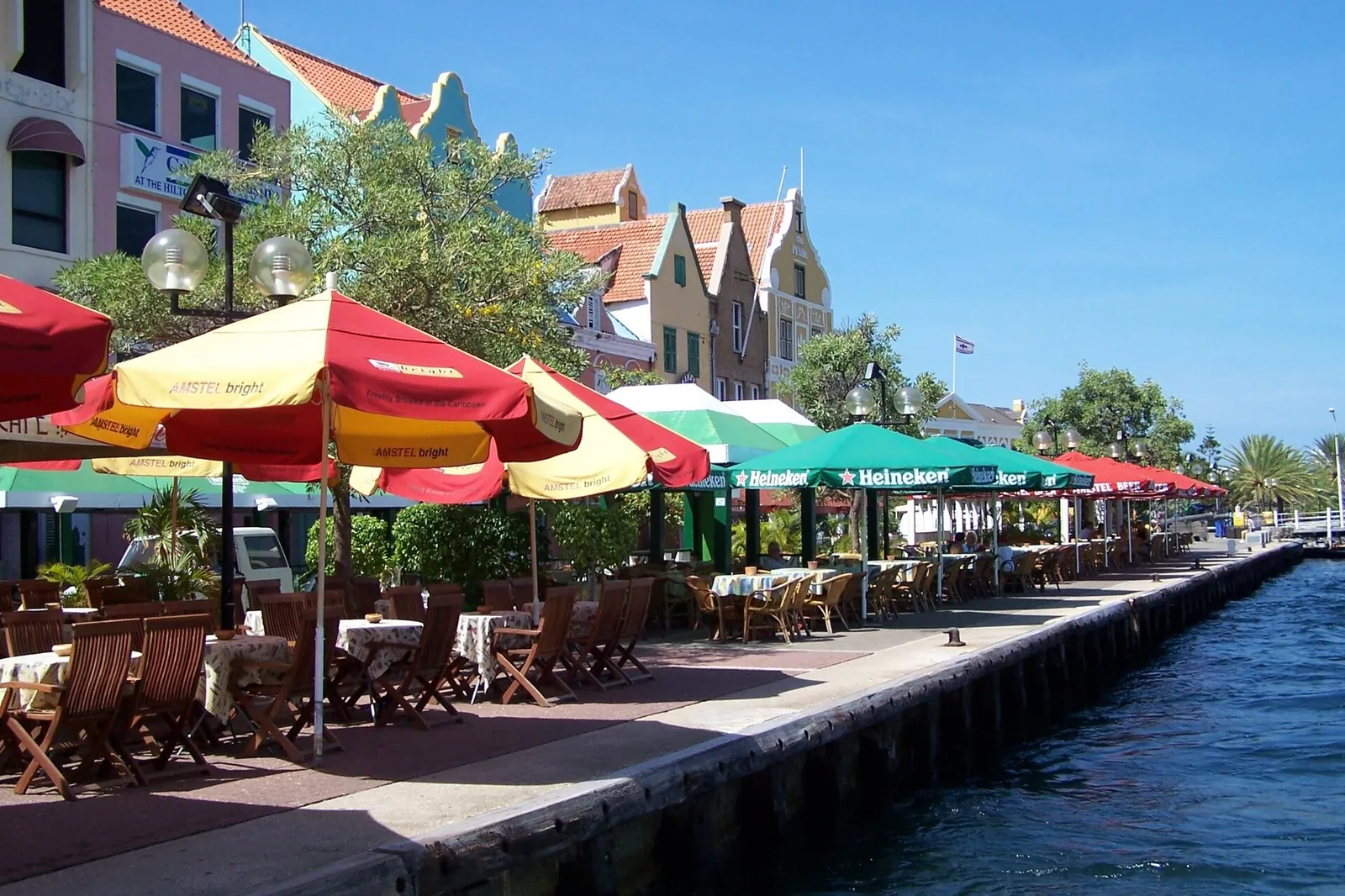
Downtown Willemstad (both sides of the harbor) is the most “city‑like” area. You’ll find:
- A mix of cafés, casual restaurants and hotel lobbies where pulling out a laptop doesn’t feel odd.
- Great views of the harbor and colorful buildings as your “office window”.
- Easy access to shops, supermarkets and bus routes.
It’s comfortable if you like to break up your day with short walks, quick coffee runs and a bit of people‑watching, and you don’t necessarily want to drive every time you leave home.
Pietermaai & Scharloo
Best for: Creative atmosphere, boutique stays, food & drink within walking distance**
These rejuvenated historic districts just east of Punda have a slightly more bohemian, creative feel. You’ll find:
- Boutique hotels and apartments often used by remote workers and short‑term expats.
- A solid cluster of cafés, wine bars and restaurants you can walk to in the evening.
- A mix of quieter daytime streets and livelier nights, especially on weekends.
Noise can vary from block to block; if you’re sensitive, ask your accommodation how loud it gets at night and whether there are bars or music venues directly nearby.
Jan Thiel & Spanish Water area
Best for: Beach access, active lifestyle, families, longer stays**
This is a popular residential and vacation area a short drive from Willemstad. It’s not as walkable as downtown, but:
- Many rentals are modern, with good Wi‑Fi and dedicated parking.
- You’re close to beaches, watersports and walking/jogging routes.
- It’s quieter and feels more suburban, with a mix of locals and long‑stay visitors.
If you work US or European hours, finishing your day and heading straight to the beach is easy here, as long as you’re fine driving to shops and restaurants.
Cafés, hotel lobbies & informal work spots
Best for: A change of scene, casual work sessions**
Curaçao doesn’t have a huge café‑coworking culture, but in and around Willemstad you’ll find:
- Coffee shops where people are accustomed to laptops, especially in business areas.
- Hotel lobbies where ordering a drink and quietly working for a few hours is fine.
- A few more “remote worker–aware” venues in neighborhoods with more expats and students.
General etiquette:
- Buy something regularly if you’re staying more than 1–2 hours.
- Ask discreetly if it’s okay to take video calls (and use headphones).
- Avoid peak lunch rush for long laptop sessions if it’s a restaurant.
Coworking spaces
Best for: Structured workdays, networking, dependable desks**
There are a handful of coworking and serviced office spaces on the island, mostly in and around Willemstad and some business parks. They tend to offer:
- Desk space or private offices with stronger business‑grade internet.
- Air‑conditioning that actually keeps up with the heat.
- Meeting rooms you can book for important calls.
Availability, community vibe and membership options change fairly often, so it’s worth:
- Searching recent online listings or maps for “coworking Curaçao”.
- Asking your accommodation host or local contacts for current recommendations.
Longer Stays & Where to Base Yourself
Central residential neighborhoods
Best for: Longer stays, living like a local, quieter evenings**
Areas like Mahaai, Zeelandia, Salinja and some parts of the eastern suburbs are more residential and generally:
- Quieter at night than downtown or beachfront party zones.
- Convenient for supermarkets, hardware stores and everyday services.
- A short drive to downtown and several beaches.
You’ll almost certainly want a car in these areas. In return, you get a more “normal life” rhythm and often better value for longer‑term rentals.
Beach vs city for remote work
A beach villa sounds perfect, but pure beach zones can have:
- More variable Wi‑Fi (and stronger winds, salt and humidity affecting hardware).
- Fewer everyday services within walking distance.
- More weekend noise from beach clubs, depending on the spot.
Many remote workers choose a compromise: live in or near Willemstad or Jan Thiel, then drive to different beaches after work or on weekends.
Accommodation logistics for remote workers
When negotiating a monthly or multi‑month stay, clarify:
- Internet specifics (speed, data caps, included or extra cost).
- Workspace: a proper table and chair, not just a bar stool on the patio.
- Air‑conditioning in the room you’ll actually work from.
- Backup options if internet goes down (mobile data strength in that area, quiet café nearby).
If you’re staying long enough, consider asking for a simple office chair; some hosts are happy to provide one if asked in advance.
Visas, Taxes & Legalities (High‑Level Only)
Visa rules, tax residency and digital nomad programs change. The details depend heavily on your nationality and how long you stay.
Broadly:
- Many visitors can enter visa‑free for short stays, often up to several weeks or months, but you must check your specific passport’s rules.
- For longer stays or repeat entries, you may need to look into residence permits or special programs aimed at remote workers, if available.
- Earning income while physically in Curaçao can have tax implications in both your home country and Curaçao, depending on your situation.
For anything beyond a standard short tourist stay, talk to an immigration specialist or tax advisor familiar with Curaçao and your home country’s rules; don’t rely on forum posts.
Daily Life While Working
Transport & commuting
Public transport exists but is limited and not optimized for a commuter lifestyle. For remote work, a rental car is the most practical option unless you base yourself exactly where you plan to live, shop and socialize.
- Roads are generally decent but can be busy at rush hours near Willemstad.
- Parking is usually manageable outside the tightest parts of downtown.
- If you prefer not to drive, look for accommodation within easy walking distance to shops and at least one workable café or hotel lobby.
Food, groceries & staying productive
Supermarkets are well stocked with European and regional products, and smaller minimarkets fill the gaps.
To stay productive:
- Do one or two big weekly grocery runs to avoid constant “quick trips”.
- Keep simple, heat‑tolerant lunches at home; going out for every meal eats time and energy.
- Remember that mid‑day sun is intense; schedule outside errands early morning or late afternoon when possible.
Many people adopt a “split day”: a focused morning, a longer mid‑day break for errands or a quick swim, then a quieter late‑afternoon work block.
Safety, noise & comfort
Curaçao is generally comfortable, but it’s still a real city and island, not a resort bubble. Basic common sense goes a long way:
- Don’t leave laptops or bags visible in parked cars.
- At home, actually use the locks and security features provided.
- If you need silence for calls, check for nearby construction or bar/music venues before booking.
Heat and humidity can be draining at first. Stay hydrated, use fans or AC when needed, and accept that your “ideal” office temperature might be different here.
Blending Work and Island Life
One of the main perks of working remotely from Curaçao is how easy it is to switch from “work mode” to “island mode”:
- Early morning: quick swim or walk before logging on.
- After work: beach, snorkeling, or a simple sunset drink near the water.
- Weekends: explore different beaches, hike, dive, or just slow down in a shaded spot.
You probably won’t “see everything” if you’re here for several weeks and working full days, and that’s fine. Treat it like living somewhere new, not like a once‑in‑a‑lifetime sprint.
Good to know
- Cash & cards: Cards are widely accepted, but have some cash for small shops, food stalls and remote beaches.
- Language: Papiamentu, Dutch, English and Spanish are common; you can work and live easily in English.
- Time zones: The island usually lines up conveniently with both Europe and the Americas, but double‑check daylight saving time differences on both ends.
- Healthcare: For longer stays, make sure your insurance covers you here; for anything complex, know in advance where the main hospital and clinics are located.
- Respectful behavior: Dress beach‑casual, but keep swimwear to beaches and pools; in town and supermarkets, regular clothes are expected.
FAQ
Is Curaçao good for digital nomads and remote workers?
It works well if you want a calmer base with good infrastructure and don’t need a huge nomad scene. You’ll find solid internet in most populated areas, enough work‑friendly spaces, and plenty of ways to relax, but not endless coworking events or meetups.
Do I need a car if I’m working remotely in Curaçao?
If you stay downtown and are happy walking and using taxis occasionally, you can manage without one. For most longer stays, especially in residential or beach areas, having a car makes daily life and exploring after work much easier.
Can I rely on Curaçao’s internet for video calls?
In and around Willemstad and other well‑connected neighborhoods, you generally can, as long as your specific accommodation has a good line. Always verify speeds with your host, and consider a local SIM with data as a backup.
Where should I stay in Curaçao as a remote worker?
For walkability and café access, look at Willemstad, Pietermaai, Scharloo and nearby neighborhoods. For a quieter, beach‑oriented lifestyle, Jan Thiel or residential areas near Spanish Water are popular, but you’ll likely want a car.
How long can I stay in Curaçao while working remotely?
It depends on your nationality and the type of entry or permit you have. Many visitors can stay for a limited period as tourists, but longer or repeated stays, especially while working, may require a different status, so always check current rules or consult an expert.
Prices and opening times change. Always check current details before you go.
The weekly Curaçao letter
One short email a week: what's on, a useful guide and an insider tip. Free, unsubscribe anytime.
🎁 Free when you subscribe: the First-timer's Curaçao Checklist (PDF).
Plan your trip
Useful Papiamentu phrases visitors really use
Handy Papiamentu phrases for Curaçao, with simple pronunciation and when to use them. Speak a bit like a local and connect beyond “bon bini”.
One Perfect Day in Curaçao on a Cruise Stop
How to use one day in Curaçao from the cruise terminal: easy walks, beaches, food, shopping and short trips further out, with honest local tips.
Curaçao with kids: a practical family guide
How to plan a family trip to Curaçao: kid-friendly beaches, activities, areas to stay, transport tips, and what parents should know before visiting.