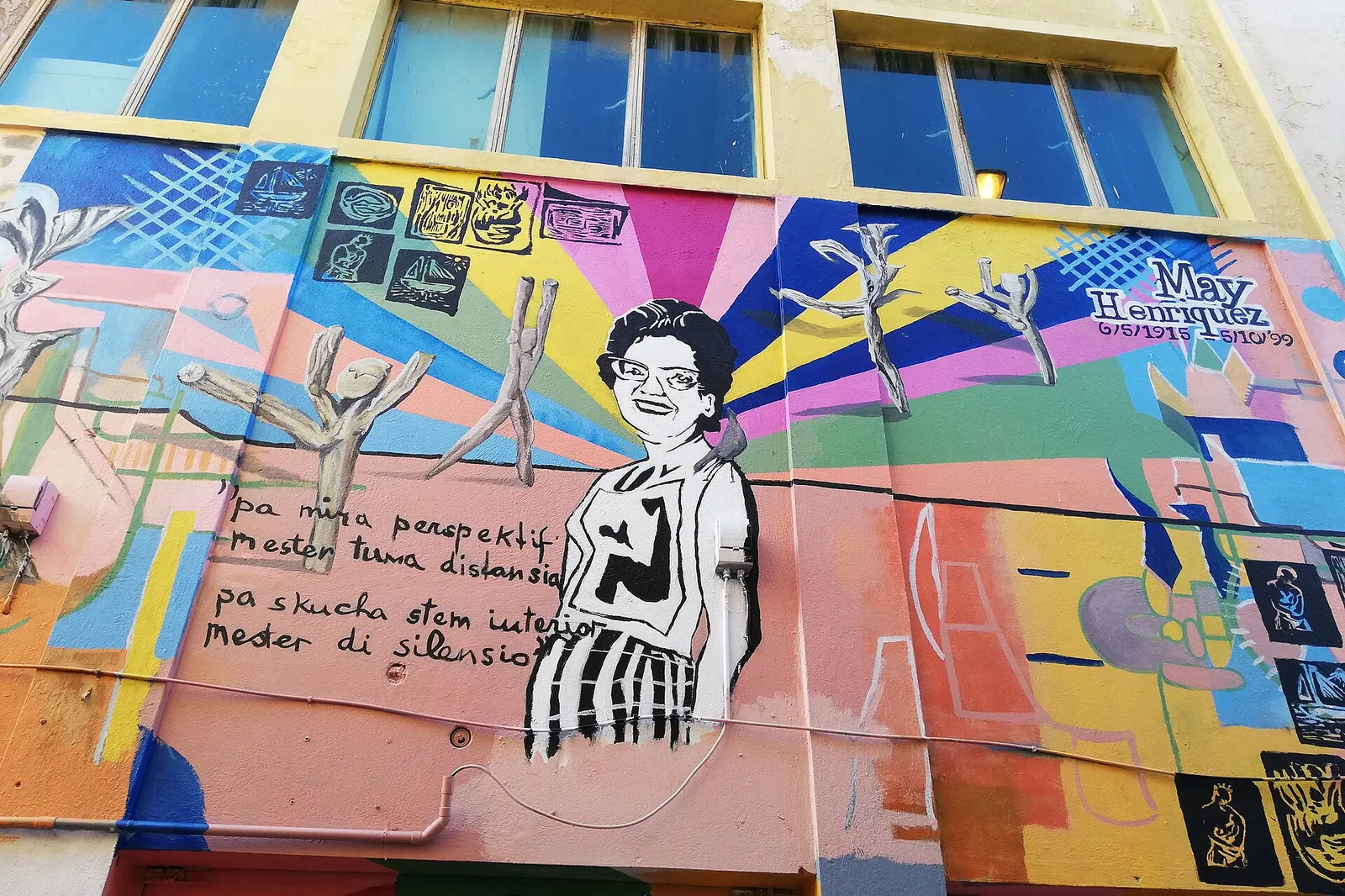
Handy Papiamentu phrases for Curaçao, with simple pronunciation and when to use them. Speak a bit like a local and connect beyond “bon bini”.
In this guide
Useful Papiamentu phrases for visitors
Visitors don’t need to be fluent in Papiamentu, but a few words go a long way in Curaçao. People genuinely appreciate when you try, even if the pronunciation is not perfect. Most locals speak good English or Dutch, so think of Papiamentu as a friendly bridge, not a survival tool.
Below you’ll find everyday phrases with: - A simple pronunciation guide (not strict phonetics). - When to use them, and how locals might react. - Small cultural notes so you don’t feel awkward.
Basics: greetings and politeness
Bon dia, bon tardi, bon nochi
Best for: Everyday greetings, starting any interaction
-
Bon dia – Good morning
Pronunciation: bon DEE-ya
Use until around lunchtime. -
Bon tardi – Good afternoon
Pronunciation: bon TAR-dee
Use from after lunch until sunset-ish. -
Bon nochi – Good evening / good night
Pronunciation: bon NOH-chee
Use after dark: arriving, leaving, or saying goodnight.
Locals really notice when visitors greet in Papiamentu instead of jumping straight into English. If you say “Bon dia” walking into a small shop, you’ll often get a warmer response right away.
Bon bini & Kon ta bai?
Best for: Being friendly, starting small talk
-
Bon bini – Welcome
Pronunciation: bon BEE-nee
You’ll see it everywhere on signs. Visitors don’t use it as often in speech, but it’s nice if you’re welcoming someone to “your” Airbnb, boat, or table. -
Kon ta bai? – How are you?
Pronunciation: kon ta BYE
This is casual, used like “How’s it going?”
Usual answer: Mi ta bon, danki. (mee ta bon, DAN-kee) – “I’m good, thanks.”
Don’t worry if your small talk stops there. A simple “Kon ta bai? – Mi ta bon, danki” already feels respectful and local.
Please, thanks and sorry
Best for: Being polite anywhere: buses, bars, beaches
-
Por fabor – Please
Pronunciation: por fa-BOR
Use just like in English: ordering food, asking questions, getting help. -
Danki – Thanks
Pronunciation: DAN-kee
Super common and easy. You’ll hear it all day. -
Masha danki – Thank you very much
Pronunciation: MA-sha DAN-kee
When someone really helps you out, or service was extra kind. -
Di nada – You’re welcome
Pronunciation: dee NA-da
You might hear this more than you use it, but locals appreciate when visitors say it too. -
Diskulpami – Sorry / excuse me
Pronunciation: dis-KOOL-pa-mee
Use if you bump into someone, step in front of someone in a small shop, or need to get a waiter’s attention politely.
Everyday situations
In shops and markets
Best for: Buying snacks, souvenirs, or chatting with street vendors
Useful phrases:
-
Mi ke… – I want / I’d like…
Pronunciation: mee kay
Example: Mi ke awa por fabor – “I’d like water please.” -
Kuantu e ta kostá? – How much does it cost?
Pronunciation: KWAN-too eh ta kos-TA
You’ll hear “kostá” with the accent on the end. -
Bo por yuda mi? – Can you help me?
Pronunciation: bo por YOU-da mee -
Esaki ta bon. – This is good / I’ll take this.
Pronunciation: eh-SA-kee ta bon -
Mi ta wak so, danki. – I’m just looking, thanks.
Pronunciation: mee ta WAK so, DAN-kee
Many shopkeepers will switch to English or Dutch as soon as they notice you’re a visitor. That’s fine; a greeting and “Danki” in Papiamentu is already appreciated.
In restaurants and bars
Best for: Ordering food and drinks with a local touch
-
Por fabor, un… – Please, a…
Pronunciation: por fa-BOR, oon
Just add what you want in English or point at the menu. The soft Papiamentu wrap-around still feels nice. -
Mi ke paga. – I want to pay / check, please.
Pronunciation: mee kay PA-ga -
Tabata dushi. – It was delicious.
Pronunciation: TA-ba-ta DOO-shee
“Dushi” is the famous word meaning “sweet, nice, delicious, sweetheart” depending on context. Use this for food, not for people (unless you really know them). -
Mi a gusta hopi. – I liked it a lot.
Pronunciation: mee a GOO-sta HO-pee
Showing appreciation in Papiamentu after a meal often leads to big smiles or a short chat.
Getting around: taxis, buses, directions
Best for: Basic navigation anywhere on the island
- Unda…? – Where…?
Pronunciation: OON-da
Add:
-
…ta e bus pa Willemstad? – …is the bus to Willemstad?
Pronunciation: ta eh boos pa WIL-lem-stad -
…ta e toalèt? – …is the toilet?
Pronunciation: ta eh twa-LET -
Mi ke bai… – I want to go to…
Pronunciation: mee kay BYE…
Then say the place name. -
Bo por droppa mi aki? – Can you drop me here?
Pronunciation: bo por DROP-pa mee a-KEE
Taxis and tours often operate in English, but Papiamentu phrases show respect and sometimes soften negotiations or small misunderstandings.
Being friendly without being awkward
Compliments and casual talk
Best for: Light, friendly interactions with locals
-
Dushi isla. – Sweet island / lovely island.
Pronunciation: DOO-shee EES-la
Very common way to praise Curaçao itself. -
Bon sabor. – Good taste / good flavor.
Pronunciation: bon sa-BOR
About food or drinks. -
Bon hende. – Good people / nice folks.
Pronunciation: bon HEN-deh
Often used to praise a family, neighborhood, or a helpful group. -
Pasa bon dia. – Have a nice day.
Pronunciation: PA-sa bon DEE-ya -
Bon siman. – Have a good week.
Pronunciation: bon SEE-man
Used especially at the start of the week or saying goodbye on a Monday/Tuesday.
Keep compliments general unless you know the person. Calling someone “dushi” directly can be flirty or intimate, depending on tone.
Meeting people
Best for: Short introductions, especially outside tourist hotspots
-
Mi yama… – My name is…
Pronunciation: mee YA-ma -
Di unda bo ta? – Where are you from?
Pronunciation: dee OON-da bo ta -
Mi ta biba na… – I live in…
Pronunciation: mee ta BEE-ba na… -
Mi ta turista. – I am a tourist.
Pronunciation: mee ta too-REE-sta
Many locals enjoy hearing where you’re from; Curaçao is small but very outward-looking, with family all over the world.
On the beach and in nature
Simple phrases for sea, sand and sun
Best for: Snorkeling trips, beach bars, casual days out
-
Mi ke un chair / parasol. – I want a chair / umbrella.
Pronunciation: mee kay oon chair / pa-ra-SOL -
Ta hopi bun. – It’s very good / very nice.
Pronunciation: ta HO-pee boon -
Awa ta friu / tiki friu. – The water is cold / a bit cold.
Pronunciation: A-wa ta FREE-oo / TEE-kee FREE-oo -
Awa ta dushi. – The water is delicious / perfect.
Pronunciation: A-wa ta DOO-shee
You’ll hear “tiki” a lot – it means “a little / a bit.” It’s a useful word when you’re trying to describe how you feel about temperature, spice levels, or noise.
When locals especially appreciate Papiamentu
Outside the main tourist bubble
Best for: Connecting in neighborhoods, small snack bars, kunuku areas
In mega-resorts and big tour operations, staff expect to speak English. Once you move into: - Small snack bars and local bakeries. - Chinese supermarkets in neighborhoods. - Food trucks, BBQ stands, and roadside fruit stalls. - Smaller beaches with mostly local families.
…that’s where a “Bon tardi” and “Danki” in Papiamentu are really noticed. It signals you’re not just on the island; you’re interested in the people too.
When things go wrong (or almost)
Best for: Smoothing over little mishaps
If you accidentally cut in line, block a narrow sidewalk, or misunderstand something:
-
Diskulpami, mi no sa. – Sorry, I didn’t know.
Pronunciation: dis-KOOL-pa-mee, mee no SA -
Trankil. – No worries / relax.
Pronunciation: TRAN-keel
“Trankil” is something you might hear from locals. Curaçao generally moves at a slower pace; showing that you’re relaxed and willing to adapt earns you a lot of goodwill.
Good to know
- Don’t stress the grammar. People are used to hearing accented Papiamentu from visitors. A few key words, even out of order, are often enough.
- Tone matters more than perfection. A friendly smile and eye contact that matches your “Bon dia” does more than a textbook-perfect sentence delivered like a robot.
- Code-switching is normal. Locals jump between Papiamentu, Dutch, English and Spanish in the same sentence. If someone answers your Papiamentu in English, that’s not rejection; they’re just trying to make life easier for you.
- Short phrases beat long speeches. Memorize 10–15 really useful expressions and use them a lot, instead of trying to say complex things.
- Ask for help with pronunciation. Many locals enjoy correcting or coaching a word or two. Treat it as part of the cultural exchange.
FAQ
Do I need to speak Papiamentu to visit Curaçao?
No. You can get by easily in English or Dutch almost everywhere visitors go. Papiamentu is more about showing respect and friendliness than about basic survival.
Will people laugh at my Papiamentu?
Usually only in a warm, friendly way if you mis-pronounce something charmingly. Locals are generally patient and happy that you’re trying; mockery is rare.
Is Papiamentu similar to Spanish or Portuguese?
It has clear influences from both, plus Dutch, African and indigenous languages. Spanish speakers often understand bits and pieces, but it’s its own language with its own rules.
Which 5 Papiamentu words should I absolutely learn?
If you only learn a few: Bon dia (good morning), Danki (thanks), Por fabor (please), Kon ta bai? (how are you?) and Dushi (sweet / nice / delicious). You’ll use these every day.
Can I use Papiamentu everywhere on the island?
You can try anywhere, but expect quick switches to English in formal settings like banks, some shops, or official offices. In small local places and casual interactions, Papiamentu phrases are especially appreciated.
Prices and opening times change. Always check current details before you go.
The weekly Curaçao letter
One short email a week: what's on, a useful guide and an insider tip. Free, unsubscribe anytime.
🎁 Free when you subscribe: the First-timer's Curaçao Checklist (PDF).
Plan your trip
Working Remotely from Curaçao: A Practical Guide
How to work remotely from Curaçao: internet, SIM cards, work‑friendly spots, neighborhoods, long stays and everyday logistics for digital nomads.

One Perfect Day in Curaçao on a Cruise Stop
How to use one day in Curaçao from the cruise terminal: easy walks, beaches, food, shopping and short trips further out, with honest local tips.
Curaçao with kids: a practical family guide
How to plan a family trip to Curaçao: kid-friendly beaches, activities, areas to stay, transport tips, and what parents should know before visiting.